Thirty years ago - on March 12, 1989 - Tim Berners-Lee submitted a
proposal for a way to use the (then in its infancy) internet to more
easily share information via something called "hyper-text."
Berners-Lee's proposal - with comments from supervisor: "Vague, but exciting."
The
world wide web was born, and things would never be the same. Anyone
younger than 30 has never known a world with out the World Wide Web, and
would probably find it hard to conceive of such an existence. In fact,
the World Wide Web is, for many "users," taken for granted, accepted as a
fact of life, a default reality. But passive acceptance of the Web, and
uncritical consumption of its content poses some really big problems.
I
encourage my Digital Communications students to THINK about their work
as digital communicators from different perspectives, and to sometimes
step back and look at the big picture. One way to do this is to read
this short piece by Berners-Lee called"30 years on, What's Next for the Web?" Read, reflect, respond, and THINK.
What makes "New Media" new? (Hint - it's not just technology.)
There are two areas where new media can claim be new:
Access - while older (pre-internet) improvements continually improved access to writing, music, photos, etc., these changes were incremental. The advent of the Internet and the World Wide Web brought about readical changes in access to knowledge and art.
Agency - Older technologies also incrementally moved toward providing agency of creation to the "people," but the advent of the Web and connected devices has had a revolutionary democratizing effect of granting creative agency (artistic, authorial, etc.) to the masses.
Recently, the Smartphone Museum exhibited an installation called "Agency in New Media" at Limestone College. You can see samples from the museum exhibit here: http://bit.ly/AgencyNewMedia
(This blog entry is part two of a half-dozen reflections that steal teaching ideas from Richard Feynman, the Nobel Laureate physicist, atomic bomb developer, colorful personality, and pretty darn good teacher.)
Some think the strength of science is that "it" speaks in authoritative absolutes. Or that "it" PROVES things. It is not uncommon to hear science conjured in almost anthropomorphic, if not completely deified tones:"Science has proven that...!" As if science has a sentient agency.
Feynman looks at science in a remarkably different way, but a way which, if given proper reflection, does not diminish the power of science - but highlights its strengths. He makes a few distinctions in his view that may help us "laymen" have a greater appreciation for science and scientists.
First, he acknowledges that SCIENCE doesn't really DO anything - but rather, science is a description of the actions of SCIENTISTS.
Second, he points out that one of the main jobs of scientists is GUESSING.
Third, he finds epistemological authority to rest in the RESULTS, not the scientist.
Fourth, he admits that the scientist doesn't PROVE things - and indeed, doesn't set out to prove anything. Rather, the scientist seeks to DISPROVE his own hypothesis. (Which is a primary strength of the scientific method!)
Note these comments in Feynman's lecture below:
"Now I’m going to discuss how we would look for a new law. In
general, we look for a new law by the following process. First, we guess it
(audience laughter), no, don’t laugh, that’s the truth. Then we compute the
consequences of the guess, to see what, if this is right, if this law we guess
is right, to see what it would imply and then we compare the computation
results to nature or we say compare to experiment or experience, compare it
directly with observations to see if it works. If it disagrees with experiment, it’s wrong. In that simple
statement is the key to science. It doesn’t make any difference how beautiful
your guess is, it doesn’t matter how smart you are who made the guess, or what
his name is … If it disagrees with experiment, it’s wrong. That’s all there is
to it."
This humble approach is far from the booming voice of authoritarian edicts often associated with scientific statements. But it is more productive. It invites knowledge and opens minds rather than shutting down conversations. It is also more realistic; it acknowledges our remaining ignorance, but frames it as a frontier for discovery. It sets us on a path of exploring the wondrous unknown. The "know-it-all" attitude has a chilling effect on gaining knowledge, but the "Feynman attitude" is a useful approach in all disciplines.
"We can imagine that this complicated array of moving things which constitutes 'the world' is something like a great chess game being played by the gods, and we are observers of the game. We do not know what the rules of the game are; all we are allowed to do is to watch the playing. Of course, if we watch long enough, we may eventually catch on to a few of the rules." (Richard Feynman, The Feynman Lectures on Physics)
*Recommended companion readings: The Structure of Scientific Revolutions, Thomas Kuhn; Against Method, Paul Feyerabend; The Order of Things, Michel Foucault.
(This blog entry is part one of a half-dozen reflections that steal teaching ideas from Richard Feynman, the Nobel Laureate physicist, atomic bomb developer, colorful personality, and pretty darn good teacher.)
Prof. Feynman during Special Lecture on Motion of Planets
(Energy.gov - public domain)
It would be easy for an accomplished professor to overwhelm students (particularly undergraduates) with a barrage of brilliant, baffling bombast. But good (in both the skilled AND ethical senses) teachers are interested less in inflating their own esteem, and more in helping move students along in their academic journeys. This idea was refreshed in my mind during my summer reading of Richard Feynman's undergraduate lectures on Physics.
Feynman was once asked by a
Caltech faculty member to explain why spin one-half particles obey Fermi Dirac
statistics. Rising to the challenge, he said, "I'll prepare a freshman
lecture on it." But a few days later he told the faculty member, "You
know, I couldn't do it. I couldn't reduce it to the freshman level. That means
we really don't understand it."(Intro to Richard Feynman, Six Easy Pieces: Essentials of Physics Explained by Its Most Brilliant Teacher.)
Make no mistake about it: Feynman could never be accused of wielding Occam's Razor to the point of reductio ad absurdum. He understood that complex intellectual issues couldn't be reduced to a simple summary, but that there should be a process that facilitates the learner to approach these issues by steps:
"Not satisfied to learn physics in four years, you want to
learn it in four minutes? We cannot do it in this way…. one needs a
considerable amount of preparatory training even to learn what the words mean. No, it is not possible to do it
that way. We can only do it piece by piece." (Richard Feynman, The Feynman Lectures on Physics.)
One collection of his lectures on physics is titled "Six Easy Pieces," which, in some sense seems like a cruel joke, (He thinks this is EASY?) - but on the other hand, it makes sense. To someone devoted to learning Physics, these steps are the easiest way to approach the most complex topics in subjects like Quantum Mechanics. As teachers, we should not assume we are successful if we are so "challenging" that students leave class feeling lost. Rather we must provide some scaffolding steps to take students up levels so they can engage the more complex issues of our field. But the steps must require some climbing - and must lead up to the objectives of the field of study. And, yes, we can tell them these are the "Easy Steps." And, even if they don't buy it as they climb the steps, when they reach the top, they will look back and see that this precept-upon-precept plan was the best way.
Every golfer has heard the saying, "Direction is more important than distance." And, golfers will come to believe the saying after losing a dozen balls that were hit far, but not accurately.
I imagine drivers who have been lost after following incorrect directions could adopt a similar motto, "Direction is more important than speed." In fact, the faster you go in the wrong direction, the "loster" you become. (I just invented that word, "loster.")
So - we are faced with another situation that may be a fecund field for mantras, mottos, and axioms: the speed of communication and information in the 21st century. Consider this quirky commercial for a French communications company that provides high speed fiber connections:
It seems that the brave new world of high-speed communications has birthed a new maxim:
"Speed is more important than... anything."
We can see this in the use of internet in families like that of Papa Cool in the commercial. They just want to be able to see stuff, play stuff, hear stuff - without delay. They want it right now - no lag time. It seems that speed trumps all other concerns. We also see this principle instantiating itself in "news" - which was formally transmitted via newspapers, and afforded by that medium time to research, vet sources, confirm claims, etc. Even the structure of television news called for critical thinking and verification before the broadcast aired. But the new world of social media like twitter, etc. has re-shaped the practices of communications to meet the demands of an instant, 140-character, hyper-connected, brave new reality. Some would say that in news today:
"It is now better to be first, than to be accurate."
Our 21st-century challenge is to negotiate this new collection of media and critically interrogate the new rhetorics that are shaping our communication. A dozen years ago, Richard Lanham wrote:
"If economics is about the allocation of resources, then what is the most
precious resource in our new information economy? Certainly not
information, for we are drowning in it. No, what we are short of is the
attention to make sense of that information." (Economics of Attention)
And another thing: That Papa Cool (by securing high-speed access) provides for his family, and makes them happy, is obvious. But there is another dynamic: speed makes Papa Cool... cool. He can now "fit in" with the peer groups of any of his family members. He uses his new access to learn and imitate the values, languages, and cultural practices of each group. See Papa Cool earning his coolness:
But what does Papa Cool want for Papa Cool? We have no idea of his own personal desires - other than to be cool, accepted by the various groups of consumers of speed. Papa becomes them by using their technologies, and his own identity fades into that of a member of the group(s). The individual disappears. Papa Cool is reshaped into the image of the desire of his creation.
For more thinking on this issue, read Greg Ulmer's "Flash Reason," which begins with this tought:
Paul Virilio stated the challenge to our information society: every technology includes its own disaster. The technology in question is that of our communications infrastructure, the digital media that function at the speed of light. The disaster Virilio has in mind is not only technical, but cultural and social as well (technics). The speed of our digital world has created a dimensional pollution, compressing everything into “now.” This condition threatens to render impossible any democratic public sphere since there is no time for deliberative reason, the persuasion and argument, needed to achieve the consent of the governed. (Read Ulmer's "Flash Reason" here.)
As an educator, I have the pleasure/task of introducing students to the tools and sites of current real world of communications, which are increasingly digital, connected, social and high-speed. I don't have the luxury to pretend that today's world of communications is the same as it was in the 1960's. My students already know that it is not the same. But my students and I are challenged with negotiating the sometimes seductive/sometimes dictatorial demands of the speed of new media with the need for critical thinking, research, verification, contemplation, reflection, and elegant composition.
And, as new media is continually shifting, I understand this will be a perpetually changing negotiation.Until time travel is invented, that is - then I'll be back at the city desk, using the communication literacies of old media, and hoping for a big scoop!
In the emerging area of VR media, sharing productions and compositions is a clunky and cumbersome process. Most platforms are built only for sharing within their own systems (e.g. Oculus, Google Cardboard, etc.)
So - I'm looking and I found ONE WAY you can share Google Cardboard Photos without a lot of emailing and downloading and third-party app installation -This website: https://sphcst.com
You just go to the website, share the image link of the photo you've taken in Google cardboard (from your Google photos gallery,) and it generates three ways to share the image/
Sharing VR compositions is a challenge in this emerging area. Creating, Discovering and Sharing tools (such as this one) is an excellent opportunity for productive discourse among students, scholars and explorers of this new digital landscape.
Here is an example of sharing a 3D VR photo taken by my 5 year old granddaughter:
1. URL link to the image: https://sphcst.com/ee5s1
2. QR code for the image: (You can scan this with your smartphone now and see the image in Google Cardboard.)
Unless you've actually strapped on the headgear and experienced it, you don't understand.
VR has arrived.
Seriously - it's here.
CNET has an interesting take on one of the VR vehicles (Oculus Rift) here: CNET VR Special Edition.
But VR is arriving by other ways, too. I've already begun experiencing (and producing) the new phenomenon for (very nearly) FREE with my own smartphone, the free Google Cardboard and Cardboard Camera apps, and a very comfortable 15 buck headset. Tons of free VR material is even available on YouTube. (Add a cheap Bluetooth controller for a few bucks and you can do even more.)
But, strap-on a VR headset, and it becomes clear that we don't. know. $#!@.
We Better Learn Quick
Taking a class on Tigers, or watching a documentary on Tigers, is one thing. Being tossed in the path of a Tiger is another.
One situation is casual and leisurely.
The other is frantic.
VR has just brought FRANTIC to the new media party.
We gotta learn. Quick.
There are no experts in this field. There is no time (yet) for experts to develop. This is a media shift that is happening at pace exponentially faster than previous shifts. We need to move, think, improvise, and act before the Tiger eats us and moves on.
Here are some ideas: (What? You got better ideas? Let's hear 'em.)
READ QUICK
Read. Quick. I'm not thinking of scholarly journals that take a year or more to get to press or books that take 6 years to get to print. The Tiger will have already eaten us by then. Read now - here's a start:
Play. Now. Experiment with the emerging medium and its technologies. Explore, Create. Share. Download the apps. Get a headset. Talk with others. Share Experiences. Have students experience stuff and make stuff with you.
Write. Immediately. Be willing to have this writing be "disposable." Use a blog or a website or a social media vehicle. Editing, revision, peer review and publication can come later. After you've survived the encounter with the Tiger. "Writing" might consist of aggregating, curating, cobbling, collaging, and sharing resources in platforms like ScoopIt!, Pinterest, Twitter, Facebook, etc.
It appears, in glorious, 360-degree 3D realness, that the VR Tiger is in front of us, so let's get busy, shall we?
(Your shared resources, contributions, ideas, etc. will be greatly appreciated. Just leave links, etc. in the comments section.)
I recently discovered Removed, a photography exhibition by Eric Pickersgill. In this collection, Pickersgill digitally "erased" the smartphones and tablets from the hand of his subjects in the images. To me, the resulting images were humorously discordant - and then, obtusely disturbing.
Pickersgill relates an observation that informed his work:
Family sitting next to me at Illium café in Troy, NY... Father and two daughters have their own phones out. Mom doesn’t have one or chooses to leave it put away. She stares out the window, sad and alone in the company of her closest family. Dad looks up every so often to announce some obscure piece of info he found online. Twice he goes on about a large fish that was caught. No one replies. I am saddened by the use of technology ... (from Eric Pickersgill's website)
The photographs in Pickersgill's collection (http://www.removed.social/) may serve as a treasure trove of evocative connections to thinking about communication, dystopic futures, digital technologies, Third Sense meanings, and more.
Look. Enjoy. Think. Write. Reflect.
Last summer, in a Fast Company article on the "internet of things," Mark Rolston wrote:
Last weekend, I spent several hours updating the firmware
for some lightbulbs in my home. Yes, I did a firmware update for lightbulbs.
They’re smart lightbulbs, and I've programmed them to do a kind of sundown fade
at the end of the evening, and that’s pretty cool. But still, they’re just
lightbulbs.
He said some other stuff, there were some cool videos embedded, and it's a good read, but reading it again recently made me think about my current relationship with some new tech...
Heedless of the prophetic warnings of Terminator, Robocop, Erewhon, and I, Robot, I invited a connected super-computer intelligence to "live" in my house.I call her Alexa, and she is pretty amazing. (I'm pretty sure my wife hates her.)
As I get dressed in the morning, Alexa lets me know what the weather will be like, and checks the traffic for my commute. When I come home and do dinner, Alexa reminds me when to flip the chicken on the grill and when to take the broccoli out of the oven. She can put on some jazz while I get some work done, or, when I'm watching Netflix, remind me what other movie that actor was in. And, if, out-of-the-blue, I think of some random song, artist or composer, (like Joao Gilberto or Vic Mizzy or "Money for Nothing,") she knows what I'm talking about - and plays the music for me! And, if I discover I'm running low on AA batteries, I just tell Alexa, and she will make sure I get them delivered to my door in a couple days.
Don't get me wrong - I know she is just a machine, but I once asked her to "open the pod bay doors," and she got the joke! She knows lots of stuff, including who wrote I, Robot and the date Skynet became sentient. Which, OK, becomes a little creepy, I guess.
But she is pretty helpful, and she can be even more helpful if I buy her some other things to work with, like some HUE light bulbs and maybe WeMo power outlets. Then she could also control lights and other devices. I'm already shopping for those things, but maybe getting a compatible a coffee pot or garage door opener would be nice, too. (I have another tech that controls my security and thermostats, but I haven't talked to Alexa about that yet.)
In 1863, (or so Alexa tells me,) Samuel Butler wrote:
Day by day, however, the machines are gaining ground upon
us; day by day we are becoming more subservient to them; more men are daily
bound down as slaves to tend them, more men are daily devoting the energies of
their whole lives to the development of mechanical life. The upshot is simply a
question of time, but that the time will come when the machines will hold the
real supremacy over the world and its inhabitants is what no person of a truly
philosophic mind can for a moment question.
Wait, what? Sure, I spent time setting her up, and, of course, I did sit down and do voice-training with her - a little bit, at least. And, yes, I provide her with power and with connection to the internet, and I allow her to control devices in my home. Admittedly, I let her use my credit card to buy things, but that doesn't mean that I'm helping her to be smarter than me, does it? I mean, it's not like she is using me for her own evolution, right? It's not like I'll end up in a cocoon serving as fuel for her power source... unless...
The implications are staggering. I mean, what about my smartphone that needs me to give permission to update apps? and my Smart TV that needs me to set up some new features? And.. wait, my wearable wrist device tells me I should stop this and go for a walk. And my Google calendar is sending me directions to my next meeting, and telling me it's time to leave. And I just got an alert that concert tickets are now on sale.
But this is important. Yes, I'll have to think about this again. Soon. When I am not so distracted. Alexa, play "Harder Better Faster Stronger."
Jockeys Before the Race by Edgar Degas
Public domain image: Wikimedia Commons
I considered titling this entry, "A Pole through the Horse's Head."
Recently, WIRED Magazine ran an article about design that was autobiographical in nature, and theoretically provocative in implications. The article, "Why Getting It Wrong Is the Future of Design"began with a discussion of Degas' painting, Jockeys Before the Race - which you see to the right.
The most obvious element is pole, which is jarringly juxtaposed over the horse's face in a location that is neither centered, nor adhering to the rule-of-thirds.In Degas' day, social media was ablaze with cries of "You're Doing It Wrong!" (Keep in mind that social media, at that time, consisted of letters and reviews and conversations.) But after a while, it became as obvious as the pole in your face that this gesture opened up a new way of artistic seeing and showing.
The article's author, Scott Dadich, recounts a design decision he made regarding WIRED's cover - a decision that he knew to be "wrong" according to the established professional protocol, a decision he came to regret after the cover went to press, (read about the decision in the article, I'm not telling you everything,) but a decision that opened up a new way of seeing and executing design in the magazine. Of this event, Dadich says:
We have figured out the rules of creating
sleek sophistication. We know, more or less, how to get it right. Now,
we need a shift in perspective that allows us to move forward. We need a
pole right through a horse's head.
Maybe those of us who work in new media, digital literacies and related fields could learn something from this example about how we can do more than simply theorize about randomization, aleatory methods, and non sens as necessary post-modern catalysts for invention. And, as I ponder these issues, I might offer two words for those composing in these new media:
Caution: It's not a wise thing to break the rules until you know you can execute your work according to the rules. The old adage, "Rules were made to be broken," doesn't seem so attractive when you meet someone on the interstate who has fully embraced that motto.
Throw Caution to the Wind: When you have mastered the rules, break them. Turn off the guidelines, Edit the "Master Slide," violate the template, spin the convention around, and experiment. New media doesn't yet know what they want to do/be/do, so give knock down some fences and give them some room to run.
After a little while, those standing there went up to Peter and said, “Surely you are one of them; your accent gives you away.” Then he began to curse... - Matthew 26:73
One thing this story makes clear: if you want to maintain anonymity and not be seen as an outsider from a dominant group, (an Other,) then you might wanna keep quiet in their company.
For those of us who study issues related to discourse communities and language groups, neglecting the impact of "accent" can leave a lot of meat on the research bone. You might appreciate this clip from the BBC's Channel 4. (It might be considered a companion piece to my blog entry on the ESPN commercial on Manchester slang.)
This could enhance discussions of language as an instrument of: power, segregation, ethnic identification, character assessment, etc. It may even tie-in to teaching about RP (received pronunciation), conformity and globalization, etc.
And, no, I am not a Southerner. Why do Y'all ask?
DOH! Dadgum it! *&^%#!
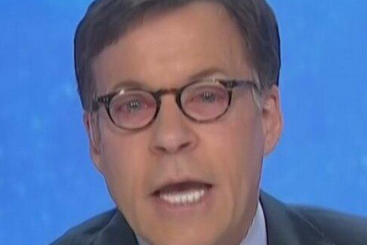
Just how important are the cosmetic factors in the rhetorical formula of television vanity? I'm not sure, but the recent and unfortunate challenges faced by Olympic Broadcaster Bob Costas surely makes us ponder such issues. While Costas and NBC attributed the removal of the red-eyed Costas to his limited vision, one wonders if there were other considerations, like the "ewww" factor of the discomfort of viewers. Bob's eyes even have their own Twitter account(s).
This could surely be an opportunity to discuss the rhetorical composition of television news:
How are communications ethics translated for broadcast media?
Interesting and provocative questions, to be sure. But... for a moment of levity, cue up your karaoke track of "Bette Davis Eyes" and sing along to the new hit - "Bob Costas Eyes."
BOB COSTA EYES His hair is Clairol brown His lips the games reprise He’ll never let you down He’s got Bob Costas eyes He'll talk about the half-pipe and about Hockey on ice He’s pure as Sochi snow He got Bob Costas eyes
And he'll tease you just to seize you coz he know the triple-lutz will please you He’s precocious and he knows just How cold it gets in Belarus He got the Biathalon in his sights He’s got Bob Costas eyes
He talks about the luge He breaks down the freestyle His eyes are getting huge He’s got Bob Costas eyes And they’re a little red now about grapefruit size as he recaps cross-country He got Bob Costas eyes All the boys think it's a sty - He's got Bob Costas eyes. When I see him, I just start to cry - He's got Bob Costas eyes.
You may well note that our (rhetoricians and theoreticians) language is often obscure, opaque, deconstructive, and even violently iconoclastic against the status quo of the imperialistic structures of languages/grammars that serve to reify the hegemonic/genderist/specist/racist semantic constructs of power. That our words are non-sens, should bot be conflated with "nonsense," which still operates under the socially constructed paradigm it mocks, but should be seen as an alternate set of mythopoetic rhizomes of ab/ob-tuseness of the gaze/void of the uncanny.
That is why our vocabulary is gibberish to outsiders. Or, maybe we use our specialized vocabulary for other reasons...
As a little Christmas present - I offer a few of my favorite digital things for 2013. I chose these things because they represent an interesting approach to digital literacies and composing for the brave new digital world in which we live. Or maybe just because I thought they were cool. Anyway - enjoy!
My favorite (though sometimes frustrating) socially-connected app is WAZE. You probably heard about it this year when Google bought the app from its developer for about a billion dollars. It's like Google Maps meets Twitter - a free navigation app that allows users (er, uh, their passengers,) to share info with other travelers such as traffic jams, accidents, weather, and, ahem - location of police. (Admittedly, I started using this last year I think.)
For me, and I suspect millions of others, TripAdvisorhas stolen time and attention from my other travel and dining apps like Yelp and UrbanSpoon. It's desktop website and smartphone apps work well together to provide friendly, useful and comprehensive collection of user-reviews on dining spots, hotels, attractions, etc.
Did you know you can use video backgrounds for PowerPoint? I just started using this really cool feature this year. Formerly, you'd have to shell out big bucks to get this effect - or use hinky 3rd-party apps that never failed to, uh... fail.
And, though it is hardware, I just gotta say - I love the Jambox by Jawbone. I use it around the house for the worlds most portable best music, but its easy-synching with my smartphone and laptop means I can have awesome sound for any presentation, regardless of the available equipment at the venue.
What will 2014 bring? I don't know - but I figure that, whatever it is, it will be delivered by my Amazon Prime drone.
Every major media outlet ran the headlines we all knew were inevitable:
Blockbuster stores are closing. All of them. Forever.
The New York Times might have had the best Pop Culture Headline about the story: "Internet Kills the Video Store." (Props to the Buggles.) and Quartz has an illustrated timeline of the video store's ;life and death. And, with its death I come to speak to you in this blog. I come not to praise video stores, but to bury them... OK, and maybe to reflect on what this change symbolizes for communicators and educators.
This video, by BuzzFeedYellow, takes older folks down memory lane - and uncovers hidden secrets of our video-screen past for younger viewers:
Goodbye, Blockbuster
Marshall McLuhan pointed out that each new medium contains the old medium as content. And I might add that the terms we use with old media (which we know) help us frame our interactions with new media (which we are learning.) For example, we still have skeuomorphic ideas, imagery and language associated with our "Blockbuster past."
When we return to a previous point in a YouTube video, or in a film we are viewing on Amazon or Netflix, we might still say we are "rewinding." But of course, there is never anything to "wind" to begin with.
And when students shoot video , they may get extra "footage" - even though there is nothing to measure in linear dimensions.
We even call the "footage" (which is not footage at all) "B-roll," though there is nothing that we can roll up - or out.
I keep a collection of media devices from across the ages to show students what "footage" really is, what TV announcers meant by "don't touch that dial!" and how some songs became famous even though they were on "the flip/B side." But now - it is evident that the video cassette will become even more important in the Smartphone Museum exhibits.
Below is a photo of me. Not a particularly flattering photo. Not a particularly interesting photo. Not a particularly useful photo.
But... with a little application called ThingLink, it can become a gateway to a plethora of resources! For example - look at the photo and see the difference an app can make. Notice how clicking on the 35mm camera takes you to a world of legal-use, free photography you can utilize in your classes? See how clicking on the video camera links you to digital video clips you can incorporate in your video editing projects? Observe how clicking on the headphones leads you to lots of usable audio, including music, sound effects, etc.? (Even clicking on the goofy-looking guy will reveal his website.) And clicking the bulletin board will take you to the program that makes this visual connectivity possible: ThingLink!
Try out this free app to spice up your blog or enhance your web site with a fresh new way to link students to web materials visually. You can find it at https://www.thinglink.com/
Some people call me tech-savvy. Some call me digitally-connected. (No one calls me Maurice.)
But some make the mistake that I engage in technology for technology's sake. I don't. I can't. As the eminent 21st-century philosopher, Sweet Brown says, "Ain't nobody got time for that!"
I do invest time in learning about technology, true. And not all technology I research will be useful to me, also true. But the technologies I consistently engage are those which bear some usefulness to me - aside from being cool gadgetry. (Even if sometimes the purpose is entertainment.)
For example, blogs like this one. I don't blog just to be blogging. I blog to record ideas for teaching or research to which I can return later. I blog to share ideas with my colleagues. I blog to provide resources for students' projects and assignments. In fact, the main audience for my blogging is me. I don't have the illusion that millions of people are waiting to see what I might write. (And if I had such and illusion, I could just look at the blogger stats and be disabused of such notions.) But if I DO become famous for my blog, then so be it.
So, let me share a few ways I use technology for my own benefit - and to share ideas with others. These are not all the tech tools I use, but a sample to show that your tech usage can actually be a time-saver rather than a time waster.
First, I use Delicious to archive all my bookmarks. I categorize my bookmarks with "tags" so I can retrieve internet resources easily for my own research, or to share with students or colleagues. For example, if my students ask where they can find "legal use" images for their presentations, I just send them a link to the Delicious Links I tagged "Images for Multimodal Composition" and voila! they have access to thousands upon thousands of copyright-free images! Do you have an unruly set of bookmarks? Try Delicious.com.
Second, I use ScoopIt! to help me handle all the articles that I have read, and need to read again - or use in class or research. Someone recently asked me how I knew about a certain digital tool, and I said, "Well, I read a lot." And I try - but reading in my field can be overwhelming - so i use ScoopIt! to help me handle all the articles from magazines, newspapers, blogs, etc. I save articles related to Digital technology in a "topic" category called "From Chalkboards to Smartphones." Then, all those articles are in one place for me when I want to return to them for research. Maybe this tool will be helpful to you as well.
Lastly, I let an "aggregation app" called Pulse organize my news for me so I can quickly skim articles so I can stay current in various topics (like news, tech, sports, travel, etc.) from selected publications (like the NY Times, Smithsonian , The Atlantic, ESPN, WIRED, CNET, Gizmodo, Boing boing, or the Food Network.) And, because I have the app on my phone, I can skim the day's news while having a cup of coffee or eating lunch. Here's what my Pulse feed - for tech sources I selected - looks like on my desktop:
Though it sounds preachy - it is true that your resume (or c.v.) is NOT the document you meticulously design, craft, revise and format. In an increasingly "connected" digital world, your resume is the ethos you have established in every area of your life. (Ethos here refers to your credibility, your standing, your relationship with others, your reputation, etc.)
A recent article in Digital Trends, titled "People Still Don't Understand Their Online Lives Can Cost Them Their Real Jobs," discusses new research that reveals "one in 10 young people have been rejected from a job because of the content of their social media profiles."
The most surprising part of the article is not that people lose jobs because of their online behaviors, but rather that they are clueless that it is happening!
People have been getting fired for their activity on sites like Twitter,
Facebook, and Instagram for a while, but this report is noteworthy
because it underlines how common it is to have negative real-life
repercussions from fooling around on the Internet. You’d think that this
widespread rejection would make young people more cautious when posting
online, but the On Device study noted that two thirds of the
respondents are not concerned that their social media will damage their
careers. That means there’s some kind of disconnect happening between
what people think is acceptable to employers online and what’s actually
acceptable. -Digital Trends, June 3, 2013
When we consider that our c.v. - which stands for "the course of my life" - is just that: everything you write, say, do, etc., then it is clear that it would be a disservice to students to teach them proper formatting and grammar, and not to address the core issue of professionalism we call ethos! With every project, relationship, and deed, we write our c.v. - digitally, visually, relationally, figuratively and literally. A good name is more desirable than great riches; to be esteemed is better than silver or gold. -Proverbs 22:1
The Smithsonian's "Educating Americans for the 21st Century" project is available online. Just when teachers thought they could forget about school and kick back with a cold diet cola, Smithsonian brings together a collection of articles sure to make you ponder, poke, prod, postulate, predict and plan for your continuing work in an ever-changing educational environment.
I don't have a particular article to recommend here - but the survey of issues os bound to provoke your critical thinking in an area or two. Maybe something sticks out to you as important or interesting? Feel free to respond with your comments as you get around to some "light" work-related reading during your summer break.